
Boehringer Ingelheim
This website is for UK Healthcare Professionals. If you are a patient or member of the public please visit our public website here
Find adverse event reporting information at the bottom of this page
Contact
Boeringer Ingelheim Logo
Boeringer Ingelheim
Boeringer Ingelheim Logo
Boeringer Ingelheim
Boeringer Ingelheim Logo
Boeringer Ingelheim
  • Diseases
    Diseases

    • Diseases
    • Asthma
    • Chronic Heart Failure (CHF) Opens in new tab
    • Chronic Kidney Disease (CKD) Opens in new tab
    • COPD
    • Idiopathic Pulmonary Fibrosis (IPF)
    • Progressive Pulmonary Fibrosis (PPF)
    • Stroke
    • Type 2 Diabetes
  • Products
    Products

    • Products
    • Empagliflozin
    • Linagliptin
    • METALYSE 25 mg (tenecteplase)
    • OFEV® (nintedanib)
    • SPIOLTO® Respimat® (tiotropium/olodaterol)
    • SPIRIVA® Respimat® (tiotropium)
  • Resources
    Resources

    • Resources
      • Healthcare Professional Resources
      • Cardio Renal Metabolism
      • Respiratory
  • Click here to join
    our mailing list to hear
    news & updates about our products
    Opens in new tab
  • Find adverse event reporting information at the bottom of this page
  • Contact
Boeringer Ingelheim
Empagliflozin
UK Prescribing Information Opens in new tab
Safety Information
Adverse Events
Empagliflozin logo
Empagliflozin
Empagliflozin logo
Empagliflozin
Empagliflozin logo
Empagliflozin
  • Overview
  • CRM Hub
  • Resources
  • UK Prescribing Information Opens in new tab
  • Safety Information
  • Adverse Events
Empagliflozin

Explore NHS England QOF data on chronic kidney disease in your patient population

Learn more
Explore map
CKD interactive map banner
  • The Burden of CKD
  • CKD in Your Patient Population
  • Managing CKD
  • Why Empagliflozin
  • Take Action

Making the Case for Action: Addressing Chronic Kidney Disease (CKD)
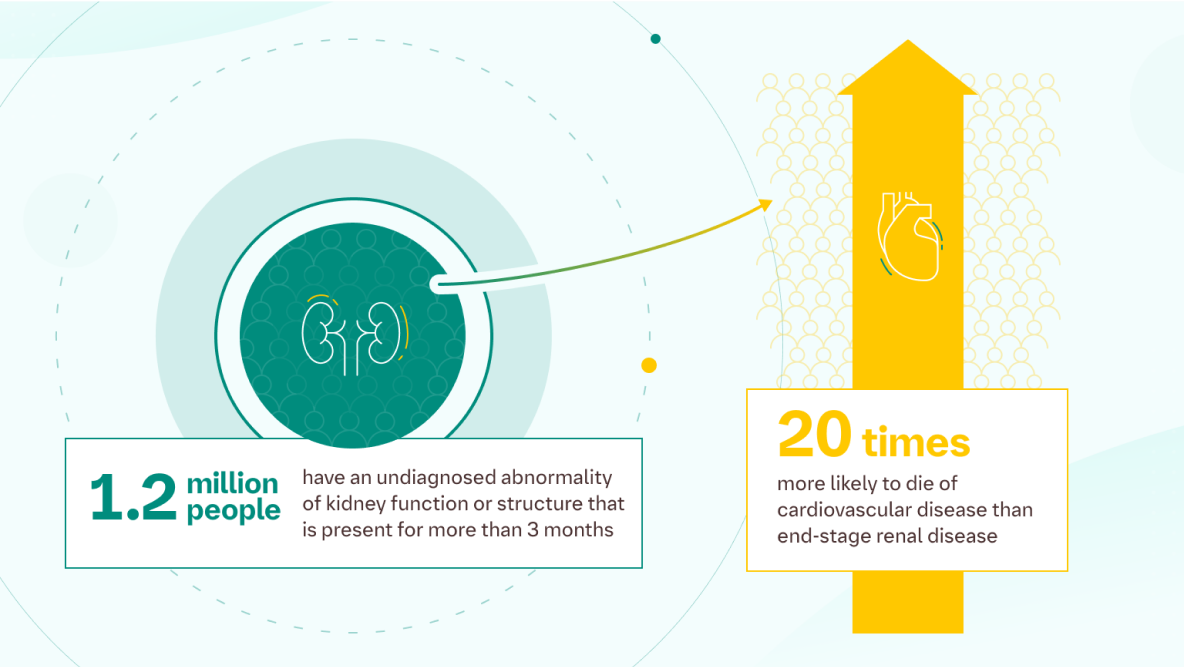
CKD burden infographic

The Hidden Burden of CKD1

Chronic Kidney Disease (CKD) is a long-term abnormality of kidney function or structure that persists for more than three months. Despite its significant health implications, an estimated 1.2 million people in England remain undiagnosed, making early detection a critical challenge.

The Link Between CKD and Cardiovascular Disease

One of the most concerning aspects of CKD is its strong association with cardiovascular disease (CVD). Patients with CKD are 20 times more likely to die from cardiovascular disease than from end-stage renal disease (ESRD). This highlights the urgent need for early diagnosis and proactive management to prevent serious complications.

1 of 3. What is the Burden of CKD and How Does Dialysis Affect It?

Chronic kidney disease (CKD) is a progressive disease and acts as a CV risk multiplier2

  • 3.25 million people in the UK currently live with CKD stages 3-5.3
  • 3.9 million people are estimated to have CKD stages 1-2.3
  • By 2033, CKD stages 3-5 cases are expected to rise to 3.9 million.3

This increase is largely due to an ageing population and the prevalence of risk factors such as diabetes, hypertension, cardiovascular disease, and the impact of health and economic inequalities.3
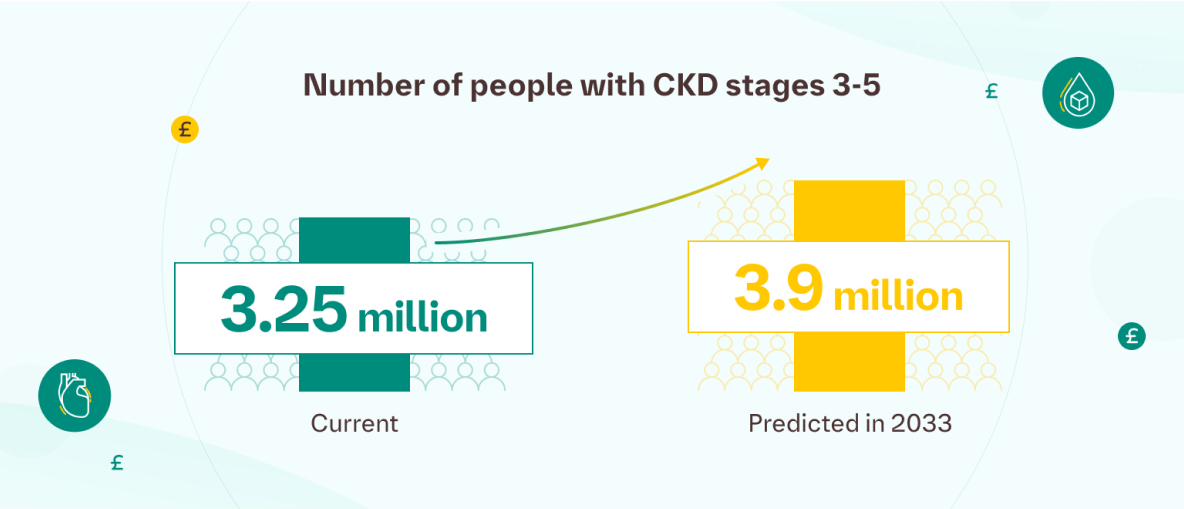
CKD burden economic infographic
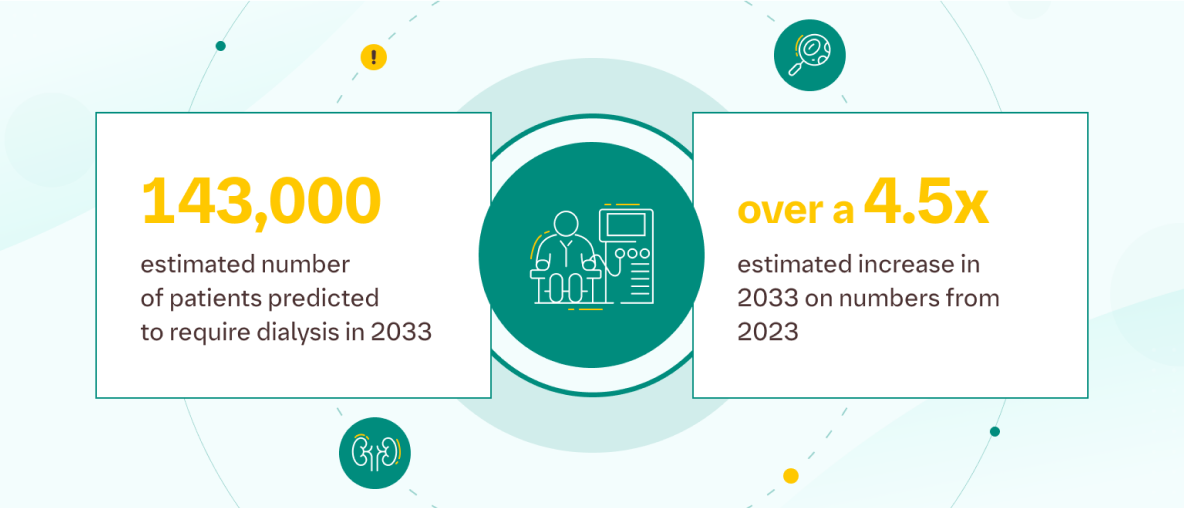
dialysis infographic

Dialysis is a significant contributor to the economic impact of kidney disease.

  • The estimated annual cost is £34,000 per patient (2023) – over three times the annual state pension.3
  • The total yearly economic burden of kidney disease in the UK is £7 billion.3
  • Of this, £6.4 billion represents direct costs to the NHS.3
  • Kidney disease accounts for approximately 3.2% of the NHS budget.3

Dialysis funding will be moving from central to local budgets, as of 2025. Have you thought about how this may affect your primary care practice?

How Can You Manage the Burden of CKD?

Emerging evidence suggests that the impact of CKD can be mitigated through strategies such as early detection, appropriate pharmacological treatment, and proactive outreach initiatives.3

A number of interventions have been cited as having the potential to improve clinical outcomes for those affected by CKD.3

SGLT-2 inhibitor icon
Use of SGLT-2 inhibitors

Early/improved diagnosis icon
Early/improved diagnosis

CKD management icon
Improved CKD management

Transplantation icon
Increased rates of transplantation

Based on a health economics model

CKD interventions could deliver a saving of £64.6 million, proving both cost-effective and life-saving.3

2 of 3. How Prevalent is CKD in Your Patient Population?

This interactive dashboard is based on NHS England QOF data, allowing you to explore diagnosed CKD prevalence across England by Integrated Care Board (ICB), primary care network, or individual practice.

Explore data across England, filtered by Integrated Care Board (ICB), primary care network or individual practices, and empower your decision-making with evidence-based insights to identify where Empagliflozin may be able to aid patient care.

Please select only one field.

NHS North East and North Cumbria ICB

NHS Greater Manchester ICB

NHS Cheshire and Merseyside ICB

NHS Lancashire and South Cumbria ICB

NHS West Yorkshire ICB

NHS South Yorkshire ICB

NHS Humber and North Yorkshire ICB

NHS Lincolnshire ICB

NHS Nottingham and Nottinghamshire ICB

NHS Derby and Derbyshire ICB

NHS Leicester, Leicestershire and Rutland ICB

NHS Northamptonshire ICB

NHS Birmingham and Solihull ICB

NHS Black Country ICB

NHS Shropshire, Telford and Wrekin ICB

NHS Staffordshire and Stoke-on-Trent ICB

NHS Coventry and Warwickshire ICB

NHS Herefordshire and Worcestershire ICB

NHS Suffolk and North East Essex ICB

NHS Mid and South Essex ICB

NHS Hertfordshire and West Essex ICB

NHS Norfolk and Waveney ICB

NHS Cambridgeshire and Peterborough ICB

NHS Bedfordshire, Luton and Milton Keynes ICB

NHS Frimley ICB

NHS Buckinghamshire, Oxfordshire and Berkshire West ICB

NHS Hampshire and Isle of Wight ICB

NHS Sussex ICB

NHS Kent and Medway ICB

NHS Surrey Heartlands ICB

NHS Bristol, North Somerset and South Gloucestershire ICB

NHS Bath and North East Somerset, Swindon and Wiltshire ICB

NHS Dorset ICB

NHS Devon ICB

NHS Cornwall and the Isles of Scilly ICB

NHS Gloucestershire ICB

NHS Somerset ICB

NHS North Central London ICB

NHS North East London ICB

NHS South East London ICB

NHS South West London ICB

NHS North West London ICB

NHS North East and North Cumbria ICB
Diagnosed CKD patients stages 3-5*: 129802
Diagnosed CKD patients stages 3-4†: 126557
Patients eligible for Empagliflozin‡: 48155

NHS Lancashire and South Cumbria ICB
Diagnosed CKD patients stages 3-5*: 67589
Diagnosed CKD patients stages 3-4†: 65899
Patients eligible for Empagliflozin‡: 24611

NHS Greater Manchester ICB
Diagnosed CKD patients stages 3-5*: 101514
Diagnosed CKD patients stages 3-4†: 98976
Patients eligible for Empagliflozin‡: 36670

NHS Cheshire and Merseyside ICB
Diagnosed CKD patients stages 3-5*: 107390
Diagnosed CKD patients stages 3-4†: 104705
Patients eligible for Empagliflozin‡: 40613

NHS Humber and North Yorkshire ICB
Diagnosed CKD patients stages 3-5*: 73342
Diagnosed CKD patients stages 3-4†: 71508
Patients eligible for Empagliflozin‡: 27259

NHS West Yorkshire ICB
Diagnosed CKD patients stages 3-5*: 86323
Diagnosed CKD patients stages 3-4†: 84165
Patients eligible for Empagliflozin‡: 31539

NHS South Yorkshire ICB
Diagnosed CKD patients stages 3-5*: 46191
Diagnosed CKD patients stages 3-4†: 45036
Patients eligible for Empagliflozin‡: 16655

NHS Lincolnshire ICB
Diagnosed CKD patients stages 3-5*: 48854
Diagnosed CKD patients stages 3-4†: 47633
Patients eligible for Empagliflozin‡: 18362

NHS Nottingham and Nottinghamshire ICB
Diagnosed CKD patients stages 3-5*: 44164
Diagnosed CKD patients stages 3-4†: 43060
Patients eligible for Empagliflozin‡: 16682

NHS Derby and Derbyshire ICB
Diagnosed CKD patients stages 3-5*: 53944
Diagnosed CKD patients stages 3-4†: 52595
Patients eligible for Empagliflozin‡: 21282

NHS Leicester, Leicestershire and Rutland ICB
Diagnosed CKD patients stages 3-5*: 39970
Diagnosed CKD patients stages 3-4†: 38971
Patients eligible for Empagliflozin‡: 14339

NHS Northamptonshire ICB
Diagnosed CKD patients stages 3-5*: 26161
Diagnosed CKD patients stages 3-4†: 25507
Patients eligible for Empagliflozin‡: 9222

NHS Shropshire, Telford and Wrekin ICB
Diagnosed CKD patients stages 3-5*: 26936
Diagnosed CKD patients stages 3-4†: 26263
Patients eligible for Empagliflozin‡: 10545

NHS Black Country ICB
Diagnosed CKD patients stages 3-5*: 57550
Diagnosed CKD patients stages 3-4†: 56111
Patients eligible for Empagliflozin‡: 21498

NHS Birmingham and Solihull ICB
Diagnosed CKD patients stages 3-5*: 40164
Diagnosed CKD patients stages 3-4†: 39160
Patients eligible for Empagliflozin‡: 14908

NHS Staffordshire and Stoke-on-Trent ICB
Diagnosed CKD patients stages 3-5*: 42034
Diagnosed CKD patients stages 3-4†: 40983
Patients eligible for Empagliflozin‡: 15469

NHS Coventry and Warwickshire ICB
Diagnosed CKD patients stages 3-5*: 48138
Diagnosed CKD patients stages 3-4†: 46935
Patients eligible for Empagliflozin‡: 18193

NHS Herefordshire and Worcestershire ICB
Diagnosed CKD patients stages 3-5*: 38023
Diagnosed CKD patients stages 3-4†: 37072
Patients eligible for Empagliflozin‡: 14735

NHS Norfolk and Waveney ICB
Diagnosed CKD patients stages 3-5*: 45153
Diagnosed CKD patients stages 3-4†: 44024
Patients eligible for Empagliflozin‡: 17167

NHS Suffolk and North East Essex ICB
Diagnosed CKD patients stages 3-5*: 48282
Diagnosed CKD patients stages 3-4†: 47075
Patients eligible for Empagliflozin‡: 18129

NHS Cambridgeshire and Peterborough ICB
Diagnosed CKD patients stages 3-5*: 26571
Diagnosed CKD patients stages 3-4†: 25907
Patients eligible for Empagliflozin‡: 9506

NHS Bedfordshire, Luton and Milton Keynes ICB
Diagnosed CKD patients stages 3-5*: 23754
Diagnosed CKD patients stages 3-4†: 23160
Patients eligible for Empagliflozin‡: 7975

NHS Mid and South Essex ICB
Diagnosed CKD patients stages 3-5*: 44320
Diagnosed CKD patients stages 3-4†: 43212
Patients eligible for Empagliflozin‡: 16541

NHS Hertfordshire and West Essex ICB
Diagnosed CKD patients stages 3-5*: 45417
Diagnosed CKD patients stages 3-4†: 44282
Patients eligible for Empagliflozin‡: 16531

North West London ICB
Diagnosed CKD patients stages 3-5*: 54387
Diagnosed CKD patients stages 3-4†: 53027
Patients eligible for Empagliflozin‡: 17376

NHS North Central London ICB
Diagnosed CKD patients stages 3-5*: 37329
Diagnosed CKD patients stages 3-4†: 36396
Patients eligible for Empagliflozin‡: 13085

NHS North East London ICB
Diagnosed CKD patients stages 3-5*: 61337
Diagnosed CKD patients stages 3-4†: 59804
Patients eligible for Empagliflozin‡: 20711

NHS South West London ICB
Diagnosed CKD patients stages 3-5*: 44717
Diagnosed CKD patients stages 3-4†: 43599
Patients eligible for Empagliflozin‡: 16075

NHS South East London ICB
Diagnosed CKD patients stages 3-5*: 53392
Diagnosed CKD patients stages 3-4†: 52057
Patients eligible for Empagliflozin‡: 20025

NHS Buckinghamshire, Oxfordshire and Berkshire West ICB
Diagnosed CKD patients stages 3-5*: 55940
Diagnosed CKD patients stages 3-4†: 54542
Patients eligible for Empagliflozin‡: 20777

NHS Surrey Heartlands ICB
Diagnosed CKD patients stages 3-5*: 37075
Diagnosed CKD patients stages 3-4†: 36148
Patients eligible for Empagliflozin‡: 14439

NHS Kent and Medway ICB
Diagnosed CKD patients stages 3-5*: 76779
Diagnosed CKD patients stages 3-4†: 74860
Patients eligible for Empagliflozin‡: 29166

NHS Frimley ICB
Diagnosed CKD patients stages 3-5*: 24896
Diagnosed CKD patients stages 3-4†: 24274
Patients eligible for Empagliflozin‡: 9135

NHS Sussex ICB
Diagnosed CKD patients stages 3-5*: 75264
Diagnosed CKD patients stages 3-4†: 73382
Patients eligible for Empagliflozin‡: 29032

NHS Hampshire and Isle of Wight ICB
Diagnosed CKD patients stages 3-5*: 62973
Diagnosed CKD patients stages 3-4†: 61399
Patients eligible for Empagliflozin‡: 23623

NHS Gloucestershire ICB
Diagnosed CKD patients stages 3-5*: 30908
Diagnosed CKD patients stages 3-4†: 30135
Patients eligible for Empagliflozin‡: 11760

NHS Bristol, North Somerset and South Gloucestershire ICB
Diagnosed CKD patients stages 3-5*: 37842
Diagnosed CKD patients stages 3-4†: 36896
Patients eligible for Empagliflozin‡: 14581

NHS Bath and North East Somerset, Swindon and Wiltshire ICB
Diagnosed CKD patients stages 3-5*: 34464
Diagnosed CKD patients stages 3-4†: 33602
Patients eligible for Empagliflozin‡: 12700

NHS Somerset ICB
Diagnosed CKD patients stages 3-5*: 24627
Diagnosed CKD patients stages 3-4†: 24011
Patients eligible for Empagliflozin‡: 9373

NHS Devon ICB
Diagnosed CKD patients stages 3-5*: 48562
Diagnosed CKD patients stages 3-4†: 47348
Patients eligible for Empagliflozin‡: 18674

NHS Dorset ICB
Diagnosed CKD patients stages 3-5*: 40742
Diagnosed CKD patients stages 3-4†: 39723
Patients eligible for Empagliflozin‡: 15808

NHS Cornwall and the Isles of Scilly ICB
Diagnosed CKD patients stages 3-5*: 24352
Diagnosed CKD patients stages 3-4†: 23743
Patients eligible for Empagliflozin‡: 9237

Zoom

- +
  • *
    Estimated patients over the age of 18, with CKD stages 3-5.2
  • †
    Estimated patients over the age of 18, with CKD stages 3-5 excluding stage 5.4
  • ‡
    Estimated eligible adult CKD patients with CKD stage 3-4, that are on an ACE/ARB, but not on an SGLT2i.2,4,5

Notes

  • CKD Patients in QOF include those with T2D.

  • SGLT2i patients driven from NHS Prescribing.

Assumptions

  • 2.5% of CKD patients Stages 3-5 are on Stage 5 (IQVIA LPD).

  • Of all SGLT2i Patients, 25.5% have CKD. Of those, 75.5% are in stages 3-4 (IQVIA LPD).

  • Of all CKD patients in Stages 3-4 that are not on an SGLT2i, 42.1% of them are on an ACE or an ARB (IQVIA LPD).

3 of 3. How Could SGLT2 Inhibitors Help in Managing CKD?

Based on Kidney Research UK epidemiological and health-economic modelling, timely use of SGLT2 inhibitors is projected to delay CKD progression and reduce the risk of dialysis and hospitalisation vs placebo.3

Progression icon
Delays Progression

Slows CKD progression and reduces end-stage kidney disease in eligible patients vs placebo.*

Dialysis icon
Reduces Dialysis Need

Fewer patients progress to dialysis with timely use of SGLT2 inhibitors vs placebo.†

Hospitalisation icon
Lowers Hospitalisations

Reduces hospitalisations linked to CKD and cardiovascular complications vs placebo.‡

  • *
    SGLT2 inhibitors significantly delay CKD progression and the incidence of ESKD in patients with or without diabetes​.3
  • †
    Modelling suggests the increased use of SGLT2 inhibitors could result in 1,960 fewer patients needing dialysis over a 10-year period​.3
  • ‡
    Economic modelling suggests reduced hospitalisation leads to an estimated cost saving of £70.9 million over 10 years.3

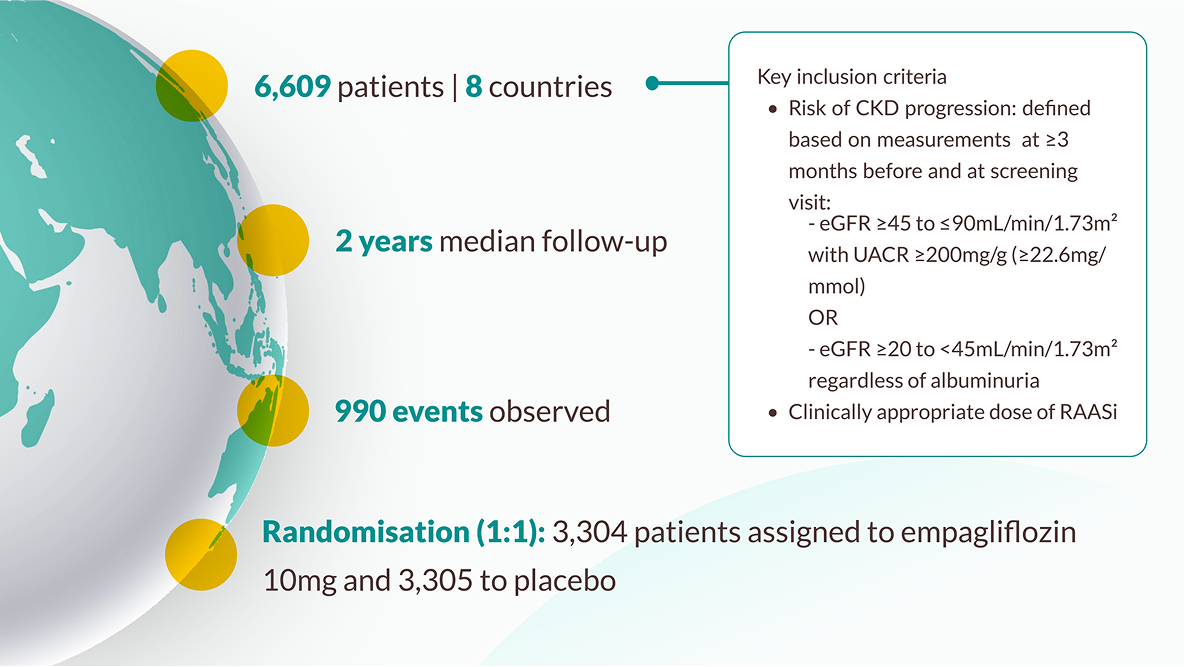
See how Empagliflozin, as demonstrated in EMPA-KIDNEY the largest SGLT2i CKD RCT to date, reduced the risk of kidney disease progression or cardiovascular death in adult patients with CKD vs placebo. 6,7

EMPA-REG OUTCOME® trial study design

  • *
    The trial enrolled 6,609 patients who had evidence of CKD at risk of kidney disease progression, with and without diabetes, with and without albuminuria. Patients with an eGFR ≥20 to <45 mL/min/1.73m2 , or an eGFR ≥45 to <90 mL/ min/1.73m2 with a UACR ≥200mg/g, were randomised to receive either 10mg Empagliflozin (n=3304) or placebo (n=3305) on top of standard of care. Empagliflozin achieved primary endpoint vs placebo: risk reduction in kidney disease progression or CV death 28% RRR/3.6% ARR (HR=0.72; 95% CI: 0.64, 0.82; p<0.001). Kidney disease progression was defined as end stage kidney disease (ESKD: the initiation of maintenance dialysis or receipt of a kidney transplant), a sustained decrease in the eGFR to <10 mL/min/1.73m2 , a sustained decrease from baseline in the eGFR of at least 40%, or death from renal causes. 7,8

EMPA KIDNEY included the broadest range of patients amongst the SGLT2i CKD RCTs in terms of eGFR and those with and without albuminuria7,9,10

Inclusion criteria of the SGLT2i CKD trials mapped to KDIGO guidance

NICE 2023 TA942 recommendation for the use of Empagliflozin in adults with CKD when mapped to the KDIGO 2024 guidance on CKD prognosis by eGFR and albuminuria categories. It is recommended as an add on to optimised standard care including the highest tolerated licensed dose of ACE inhibitors or ARBs, unless these are contraindicated.11
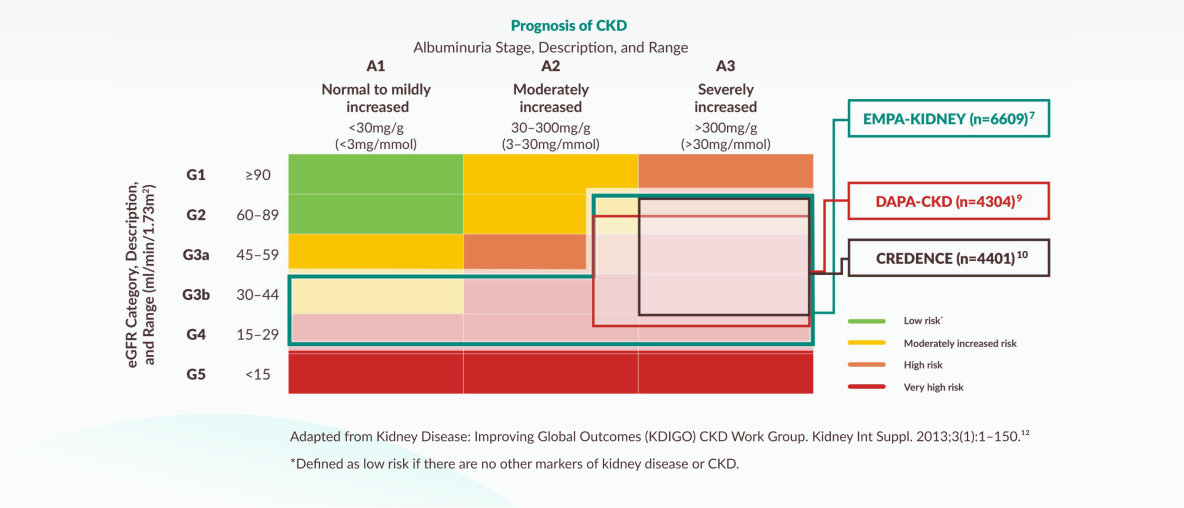
Prognosis of CKD
Early intervention infographic

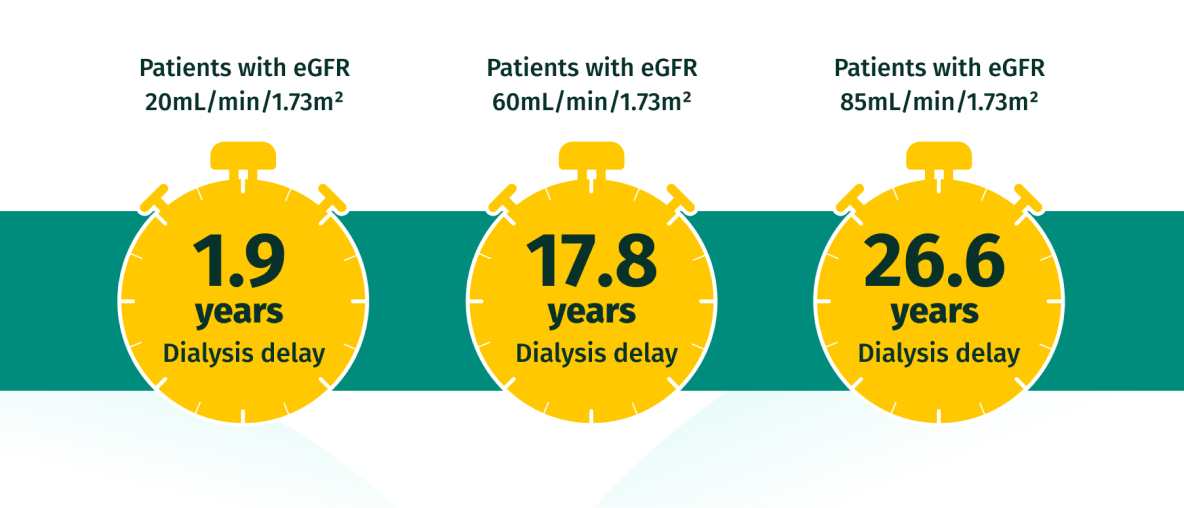
EARLY intervention with Empagliflozin may help patients avoid dialysis for longer13

Potential impact on time to dialysis versus SoC based on extrapolated data from the EMPA-KIDNEY trial

Based on hypothetical transformation of chronic eGFR slopes into time to kidney failure, i.e., time to need for kidney replacement therapy, defined as eGFR = 10mL/min/1.73m2. Data estimated from each baseline eGFR value by applying the chronic eGFR slopes corresponding to participants on standard of care vs Empagliflozin within the prespecified eGFR subgroups (eGFR cutoff points to define subgroups).

From Insight to Action: Practical Resources for You and Your Patients

Empagliflozin CKD patient booklet
Downloadable resource

Empagliflozin CKD patient booklet

Patient‑friendly booklet that supports treatment adherence by helping Empagliflozin patients better understand their diagnosis, therapy, and long‑term management needs.
  • Download now Opens in new tab
Empagliflozin Initiation & Management guide
Downloadable resource

Empagliflozin Initiation & Management guide for T2D, CHF and CKD

Practical guidance to support initiation and ongoing management across T2D, CKD and heart failure.
  • Download now Opens in new tab

GET UPDATED

Keep up to date with resources and updates from Boehringer Ingelheim

Subscribe for updates
Abbreviations

ACE: angiotensin-converting enzyme, ARB: angiotensin II receptor blocker, ARR: absolute risk reduction, CHF: chronic heart failure, CI: confidence interval, CKD: chronic kidney disease, CV: cardiovascular, CVD: cardiovascular disease, eGFR: estimated glomerular filtration rate, ESKD: end-stage kidney disease, ESRD: end-stage renal disease, HR: hazard ratio, ICB: Integrated Care Board, KDIGO: Kidney Disease: Improving Global Outcomes, NICE: National Institute for Health and Care Excellence, QOF: Quality and Outcomes Framework, RAASi: renin–angiotensin–aldosterone system inhibitor, RCT: randomised controlled trial, RRR: relative risk reduction, SGLT2: sodium–glucose co-transporter 2, SoC: standard of care, T2D: type 2 diabetes, uACR: urine albumin-to-creatinine ratio.

  1. National Institute for Health and Care Excellence (NICE). CVD prevention: chronic kidney disease detection and management. Available from https://stpsupport.nice.org.uk/cvd-prevention-ckd/index.html (Accessed April 2026).
  2. NHS England. Quality and Outcomes Framework, 2023-2024. Available from https://digital.nhs.uk/data-and-information/publications/statistical/quality-and-outcomes-framework-achievement-prevalence-and-exceptions-data/2023-24 (Accessed April 2026).
  3. Kidney Research UK: A UK public health emergency. The health economic of kidney disease to 2033. June 2023. Available at: https://www.kidneyresearchuk.org/about-us/influencing-change/health-economics-report/ (Accessed April 2026).
  4. IQVIA LPD, Ad-hoc Report [BI_HF_REGT_ADH.DN2] , Standard Panel, MAT November 2024, (Accessed April 2026).
  5. OpenPrescribing. Available at https://openprescribing.net/analyse/ (Accessed April 2026).
  6. Empagliflozin Summary of Product Characteristics (SmPC).
  7. Herrington WG, et al. N Engl J Med. 2023;388(2):117-127. (EMPA-KIDNEY results and the publication’s Supplementary Appendix).
  8. Empagliflozin Data on File (EMP 23-22).
  9. Heerspink HJL et al. N Engl J Med. 2020;383:1436–1446.
  10. Perkovic V et al. N Engl J Med. 2019;380:2295–2306.
  11. NICE. Empagliflozin for treating chronic kidney disease: Technology appraisal guidance (TA942). 2023. Available from: https://www.nice.org.uk/guidance/ta942/.
  12. Kidney Disease: Improving Global outcomes (KDIGO) CKD Work Group. Kidney Int.2024;105(4S):S117-S314.
  13.  Fernández-Fernandez B, Sarafidis P, Soler MJ, Ortiz A. Clin Kidney J. 2023;16(8):1187–1198.

PC-GB-112297 | April 2026

Reporting adverse events

Adverse events should be reported. Reporting forms and information can be found at www.mhra.gov.uk/yellowcard. Adverse events should also be reported to Boehringer Ingelheim Drug Safety on 0800 328 1627 (freephone).

Please be aware that this website contains promotional information about Boehringer Ingelheim medicines and services. Some of this may not be directly relevant to your scope of practice and it is your own decision whether you choose to view this information.

Disclaimer

The content on this website is in relation to adult patients.

Empagliflozin is not recommended in severe hepatic impairment, breastfeeding, Type 1 diabetes and is contraindicated in patients with hypersensitivity to the active ingredient or any of its excipients. Empagliflozin should be avoided in pregnancy.

Please consult the SmPC for full details regarding adverse events, monitoring requirements and interactions prior to prescribing Empagliflozin.

  1. Empagliflozin UK Summary of Product Characteristics (SmPC).
Indications

Empagliflozin is indicated for the treatment of adults with insufficiently controlled type 2 diabetes mellitus as an adjunct to diet and exercise

  • as monotherapy when metformin is considered inappropriate due to intolerance
  • in addition to other medicinal products for the treatment of diabetes1

Empagliflozin is indicated in adults for the treatment of chronic kidney disease.1

Empagliflozin is indicated in adults for the treatment of symptomatic chronic heart failure.1

PC-GB-112290 | April 2026

  1. Home
  2. Empagliflozin
  3. Resources
  4. NHS England QOF data on chronic kidney disease
  • Contact Us
  • Cookie Policy
  • Privacy Policy
  • Sitemap
  • Terms of Use
  • Accessibility Statement

Boehringer Ingelheim Logo
Boehringer Ingelheim

This information is for UK Healthcare Professionals only. Products discussed herein may have different labelling in different countries. 
Use of this site is subject to the Internet Site Legal Notices and Disclaimers and Privacy Notice.

Copyright © 2021-2026 Boehringer Ingelheim, Inc. All rights reserved. PC-GB-110791 V3 May 2026.